Saturday, 17 June 2006

With Mostly Books moving ever closer to their 1 July launch, I have been thinking about my own book-buying habits. I live in a town that is blessed with branches of two of the big bookshop chains, Ottakar's and Waterstones (one will no doubt disappear once the Wottakars merger goes through). We also have a large W H Smiths, and several smaller independents. So why do I actually buy most of my books from a certain online behemoth?

I lived in the US for several years a few years ago. We lived then within a short distance of both a huge Borders and a huge Barnes & Noble (there were no indepents particularly close to us). I found myself buying most of my books from those two, rather than from the American online behemoth. Why the difference?

It's not a matter of price. I am fortunate to have a well-paying job, and I can afford to pay full price for books if there are good reasons for doing so. I see 2-for-3 offers as an excuse to pick up a book I might not otherwise read, if there are two that I actually want. Buying online in the US would have been a cheaper, but I didn't do it.

I think that it is in part to do with where and when I learn about books that I might want to read. My main sources, apart from personal recommendations, are the Review section of theguardian on Saturdays, the Arts and Books section of the Independent on Fridays, the London Review of Books (alternate Fridays), and Open Book on Sundays on Radio 4 (when it's not being to up itself about popular fiction). What these have in common is that they appear at the weekend. What with all the other things that have to be fitted in to the weekend, I find myself deciding what books I would really like to get hold of on Sunday afternoons.

Now I tend to be a bit of an impulsive shopper. If I decide that I want something, then I want it now, or as close as possible to now. If I put an order in to Amazon on Sunday evening I will usually get a package through the door just before I go to work on Tuesday, and can look forward to reading the contents that evening.

If I decide to go the bricks and mortar route it takes much longer. Because I work normal office hours, and I am a little too far from the middle of town than makes a lunchtime trip convenient (I cycle to work, so would have to cycle into town and back), I can only get to the local Ottakars in the evenings or at the weekends. Except that they close at 6:00pm, and I can't always get there by then, and even if I can, having entered the shop I don't want to be rushed. Which means that I can only get in there at the weekends.

Back in the US the bookstores stayed open until 10:00 or 11:00pm, so I could go almost whenever the urge took me. Add to that the coffee and buns, and I could go, buy, and read a few chapters in quiet comfort.

So, Nicki and Mark, if I lived in Abingdon, the best way to get me to buy all my books from you would be to open in the evenings. Given all the demands on you as you start up, I rather suspect that you didn't want to hear that...
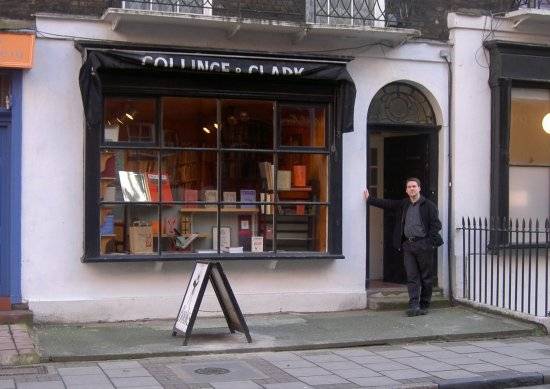
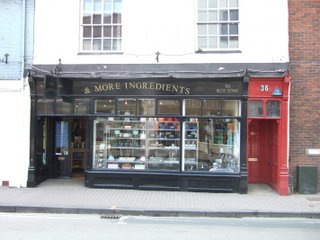
I must just add that my first thought on seeing the photograph of the future Mostly Books (at the top of this post), my first thought was that it looked just like a bookshop. A particular bookshop in fact. Black Books. I look forward to seeing how far the resemblance extends on the inside.

Friday, 2 June 2006

I have been trying to come up with a good reason to blog about Smoke, apart from the fact that it is a wonderful quarterly magazine that deserves to be read widely - particularly by anybody who loves or hates London, or does not know it well enough to form an opinion. Subtitled "a London Peculiar" and describing itself as "words, photos and graphic art inspired by the City", Smoke is a labour of love by South Londoner Matt Haynes, and North Londoner (by adoption at least - I believe that underneath she is actually of the Welsh persuasion) Jude Rogers. It appears roughly quarterly, and issue number 8 was waiting for me on my return from Llangollen (of which more later).

Each edition (I have all except, tragically, the very first one) contains a wonderfully unpredictable mixture of essays, black and white photographs, and a number of ongoing series of microfeatures on aspects of London. Some of these are long running: we are up to number 7 in the series on London's campest statues (outside Pemberton House in EC4), while others start off well but disappear without trace shortly afterwards: I don't think we got past the first of Areas of London that rhyme with bits of a full English breakfast (Osidge, in Barnet).

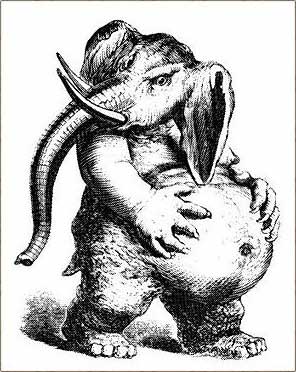
So why do I think it appropriate to plug this excellent organ now? It's not that I have a piece in the next edition (although I am certinly thinking of writing something for Matt and Jude* to consider. It's just that they have just started a new series of microfeatures on a subject close to the heart of this blog. London Elephants started in issue 7 with that thing in the middle of Wandsworth Bridge roundabout. This issue we have the Stratford rhubarb (as pictured). These are elephants in the sense of elephants in the room - "things that are so hugely and mind-bogglingly inexplicable that, somehow, they don't register".

So now you know. Do go and subscribe. If you have an opinion on the greatest city the world has ever known, then Smoke will support or challenge it. If you don't, then Smoke will give you a great chance to form one.

* It looks as if Jude is moving on. Good luck to her, and even more to Matt, left to produce issue 9 on his own.
Heyeroines in need of a slap

24. Kate Malvern (Cousin Kate)

Miss Malvern, if we are to believe her own account of her upbringing, is a resourceful woman. Years spent in the Peninsula, following her father, has inured her to physical hardship and social deprivation. No English home can be so cold, or draughty, no bed so hard or ill-made that she has not experienced far worse in Spain or Portugal. No English company can be so rude, so strange, so unnatural, that she has not already met its equal among the men of Wellington's army, or the local peasantry. To Miss Malvern nothing can crop up that cannot be dealt with by the correct application of wit and aplomb.

So, having lost her position as a governess as a result of some or other misunderstanding (and, out of the common courtesy for which these essays are so renowned, we will not go there) it is only to be expected that Miss Malvern will not merely settle down comfortably, but find plenty to occupy and amuse her mind, whether she were to find herself in a converted coach-house now being used to house her old nurse's new family, or in an elaborately landscaped estate situated in the very vague vicinity of, say, Market Harborough.

But, when she finds herself at Staplewood, the very epitome of a landscaped estate in the very vague vicinity of Market Harborough, what does she do? Nothing.

When she discovers that her apparently loving aunt is in fact a swivel-eyed harridan who is intercepting her letters, does she come up with a brilliant stratagem for thwarting her evil plans, or does she just mope around doing nothing?

When she discovers that her impossibly beautiful cousin is a couple of tassels short of a pair of Hessians, and prefers biting the heads off dead rabbits than playing billiards does she come up with a scheme to have him removed to a place of safety, or does she just sit and fret and do nothing?

When she discovers that the household servants are embroiled in a dispute among themselves more complex than the War of the Austrian Succession, and that the housekeeper is given to prophecy while the cook is a totally unclichéd histrionic Frenchman and her cousin's manservant is apparently a badger, does she come up with a way of escaping to Market Harborough and taking the stage coach to London, or does she potter around the garden cutting flowers and achieving nothing?

When her other cousin, the not-quite-so-beautiful but somewhat-more-sane one, makes a rather implausible offer of marriage does she decide that enough is more than enough, or does she put off responding and instead choose to do nothing?

When the frankly scary aunt insists that Miss Malvern must marry her mad-as-a-fruitbat cousin to maintain a family tradition that nobody else is even aware of, or else face a lifetime of drudgery despite her somewhat underplayed skill as a modiste, does she stand up to her with vigour, or does she duck the whole subject and instead do nothing?

When the quite-a-long-way-to-the-east-of-Barking cousin finally goes over the top and strangles the dangerously-obsessed aunt with his bare hands before drowning himself rather beautifully in the lake, does Miss Malvern consider that there is nothing in the world that would make her marry anyone remotely connected to that side of the family, or does she decide to go ahead and accept an offer from a close relative of the deranged and departed whom she has known, when you count it up, barely more than a week?

Would a slap actually do any good, or should somebody wheel out the cluestick?


Technorati Tags:

Friday, 26 May 2006

This will be my last post for a while. Mrs Wenlock is driving me into the mountain fastnesses of Wales today, and leaving me in a remote cottage with no access to telephone, television or the interweb thingy so that I can have a week of solitude in which to write a good chunk of my new novel, an as yet untitled sequel to Lord Alexander's Cipher; or, the Bridekirk Behemoth. As I have said in a previous post, this will have an Arthurian theme of sorts, although it takes place in 1814.

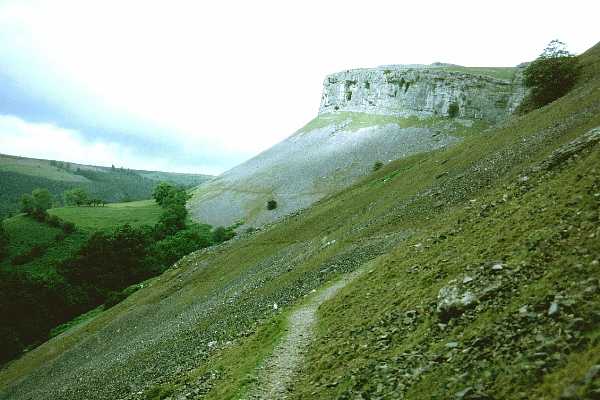
My cottage was chosen for its remoteness - it is a good few miles from the nearest pub, for instance - but it turns out that the nearest town, Llangollen, claims Arthurian connections for itself. Indeed the hill in the picture below is called Craig Arthur, and nearby is Croes Gwenhwyfar, said to be the only place in Britain named after Guinevere. I should add that the earliest record of the name is from 1690, and was recorded by Edward Lhuyd, the inventor of Celticism, so it probably does not stand much scrutiny.

Sarah was in Llangollen quite recently, and one of the comments on her post reminds me that it is not far from where the action of some of Susan Cooper's The Dark is Rising sequence takes place. I have nearly finished reading the last of the series to the Wenlock heir at bedtime.

Look for me to post again next Sunday.
One of the highest hurdles for any unpublished author to overcome is finding an agent. I know that I have been incredibly fortunate to be taken on by the first agency that I approached, and also to have such an excellent working relationship with them. Of course we have not got as far as securing a publishing contract, but their record speaks for itself: if Lord Alexander's Cipher; or, the Bridekirk Behemoth does not find a publisher it won't be because Ampersand aren't any good.

Not everybody is so lucky, and many aspiring writers are desperate to find an agent. So desperate that they are at risk of falling for scams. This seems to be a bigger problem in the US than over here, but the US is also where you will find operations like Writer Beware which exist to expose such scam-merchants for what they are.

Of course not all scammers are happy with the exposure that they get on websites like Writer Beware's Twenty Worst Agents list. One agent on this list, Barbara Bauer, has even started making legal threats against websites that highlight her place on that list. This has sometimes worked, but more often stirred up further negative publicity.

In addition to the Writer Beware list, there is also the venerable Preditors and Editors, who can be relied upon to draw attention to scammers (see what they say about Barbara Bauer). And for those of you looking for the personal touch, a post like this would not be complete without a reference to Gerard Jones and his snappily titled site, Everyone Who's Anyone in Adult Trade Publishing, Propagandaville and Tinseltown, Too, is a Worthless, Superfluous, Giddy, Giggly, Chickenhearted, Money-Grubbing Nazi Moron.

Tuesday, 23 May 2006

Back in April I noted that Wenlock Books had been shortlisted for Independent Bookseller of the Year at the British Book Trade Awards. Well, they won.

The bookshop (with which I have no connection other than in the name) has been getting quite a lot of good press recently. I see that theguardian used the groanworthy headline "Much ado about Wenlock" for an article about them back in March. They are also featured in yesterday's piece on independent bookshops that are bucking the trend of discounting and closure that has been too much in the news over the last few weeks.

That feature should be cheering news also for Mark and Nicki at Mostly Books, coming soon to Abingdon.

Monday, 22 May 2006

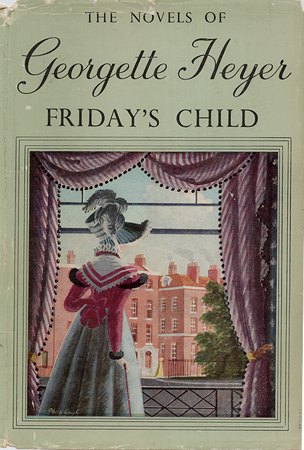
Back in 1995 the BBC recorded dramatisations of two of Georgette Heyer's novels for the Radio 4 Playhouse slot - 90 minute single dramas. One of those two, Friday's Child, was rebroadcast by BBC7 at the weekend, and is available on their Listen Again service until next Friday.

The production stars Elli Garnett as Hero Wantage, and James Frain (Paul Raines in series 4 of 24) as Sherry. There are a few well-known names among the minor characters. Simon Russell Beale (a brilliant Shakespearean actor whom I saw a few years back as Richard III) plays Mr Tarleton, the late Mary Wimbush (Julia Pargeter to fans of The Archers) plays Lady Saltash and Julian Rhind-Tutt (Dr "Mac" Macartney from Green Wing) plays Ferdy Fakenham brilliantly.

All in all, well worth 90 minutes of your time.

The other Playhouse production from 1995 was Faro's Daughter. I do not know whether this has been rebroadcast, or will be soon. It stars Sylvestra Le Touzel (Fanny Price from the 1983 BBC Mansfield Park) and Nathaniel Parker (Harold Skimpole in the recent BBC Bleak House) as Deb Grantham and Max Ravenscar. The BBC also recorded Regency Buck in 1986, with Elizabeth Proud as Judith Taverner, and Steve Hodson as Lord Worth. Going back even further, to 1974, they recorded The Toll Gate, but I do not know who played what part in that.

Sadly Radio 4 no longer supports a slot for 90 minute dramas. The World Service has moved away from any sort of drama, and BBC7 commissions almost nothing new. That leaves only Radio 3 in a position to broadcast any further full-length productions like these. I fear that we will wait a long time before any more of Heyer's books are adapted for the radio in this way.

Thursday, 18 May 2006

Readers with a retentive memory may recall that, back in January, I decided to change Lord Alexander's surname, because "Hawkshead" was too close to "Hawkwood", the surname of the hero of James McGee's Ratcatcher, a book which appeared to have a number of features in common with Lord Alexander's Cipher; or, the Bridekirk Behemoth. At that time I decided not to read McGee's book, so that I wasn't influenced by it.

Now that I am at the dotting of Ts and crossing of eyes stage of redrafting, I decided that it was safe to give Ratcatcher a go. I finished reading it this morning, on the coach up to London (National Express rather than the Mail, but at least I was guaranteed a seat inside).

Good news on two fronts. The first is that while there are elements in common between the two books - French spies, English aristocrats, a plot against the Prince, and much drinking of Brandy - these are standard features of books set in the early 19th Century, and there are no egregious similarities. The two are quite different in terms both of plot and tone. Bow Street Runner Matthew Hawkwood is at home in that part of London East of St Martin's Lane, while Lord Alexander Harrow, youngest son of the Duke of Derwent, prefers it West of the Lane - not that each does not cope in the other's natural territory when necessary. Hawkwood would probably be able to handle an elephant too, but I was relieved to discover that he was not called upon to do so.

Not surprisingly McGee's book is darker than mine: there is more violence, and less romance. In the territory that stretches between and around the two poles of Bernard Cornwell and Georgette Heyer, McGee is closer to the former while I am, if it is not presumptious to claim so, nearer to the latter.

The other good news is that Ratcatcher is well written, well researched, and was fun to read. It is, I believe, intended as the first of a series. I hope that this proves true.

Sunday, 14 May 2006


Two newpaper articles have caught my attention in the last couple of days.

The first is a piece by Sara Fitzgerald in the Washington Post titled "Romance, Writ Large - A Tried-and-True Genre Of Novels Expands, And Business Is Booming". It is an account of the Washington Romance Writers' annual retreat at Harper's Ferry (pictured above). It gives a reasonable overview of the state of Romance in the US, but what struck me - indeed what struck the Colonial correspondent who alerted me to the item - was a mention of how one author found her way into the Regency period:
Kathryn Caskie was a former marketing executive in AOL's financial content area when she found her voice writing witty Regencys, a sub-genre of books set in the England of 1811-1820, the era of Jane Austen. The Waterford, Va., author had come close to getting a "Scottish Medieval" historical romance published when she had a brainstorm while watching trailers for the movie Rules of Engagement. "What if two old ladies found a war manual and mistook it for a manual on how to get engaged?" That led to her own Rules of Engagement, published by Warner Books' Warner Forever imprint. That was followed by another Regency, Lady in Waiting, about a lady's maid who has a shopping addiction.

The Scottish Medieval historical, she says, remains in a drawer. "People don't want angsty Medievals from me, they want to have fun. That's my audience."
Kathryn Caskie is not the only writer with a Mediaeval historical tucked away in a drawer. Two of my earliest attempts at writing were set in the Mediaeval period: one recasting Æthelred II (known as Unræd, "ill-advised" or, wrongly, "unready") as the heroic but tragic figure he really was; the other telling the extraordinary story of Judith, daughter of the Carolingian King Charles the Bald. Kaskie says that readers don't want angsty Mediaevals from her. I never got far enough to know whether they might want them from me: it was enough for me to establish that while I wanted the stories told, I wasn't enjoying trying to tell them. Maybe one day.

The other article is from the Scottish Sunday Times. "The Write Way to Fall in Love" by Kenny Farquharson describes a recent Romance writing course given by Sharon Kendrick at the Castle of Park. It was a course at the Castle of Park, given by Annie Burgh, which pointed me at the Romantic Novelists' Association. Joining the RNA was probably the single best move in my (as yet still short) writing career. Mr Farquharson cannot resist the usual inaccurate pastiche of Mills & Boon style at the start of his piece, but once past that he gives a better than average account of the course.
Taking a lunchtime break in the sunshine on the Castle of Park lawns, Kendrick explains that the writing of the perfect Mills & Boon is partly instinct and partly an awareness of unwritten rules...

...To succeed in this trade, she says, writers cannot be cynical hacks out to make a killing from women’s simple desires, but must have "a fundamental belief in the redeeming power of love". As for the archetypes and sexual stereotypes that people the books, she is unapologetic....

..."These books are fantasy and they end with the resolution of the romance, which is exactly where Pride and Prejudice ends. We do not hear about what Mr Darcy is saying to his wife 10 years down the line. Instead of calling her ‘my darling Lizzie’ in that quietly passionate way and loving her feisty spirit, he might think she’s an argumentative cow."
This is better certainly than the piece on the same course by Martyn McLaughlin in yesterday's Glasgow Herald (not available on-line). I have only seen the opening paragraph, but McLaughlin manages to squeeze in enough inaccurate, insulting and patronising clichés there to put me off wanting to read anything else by him.

Saturday, 6 May 2006


What is a Romantic Novel? The latest issue of the Romantic Novelists' Association's RNA News contains two essays on this subject, from RNA Chairman Jenny Haddon, and from RNA President Diane Pearson.

Jenny is clear that "romantic" is a slippery word. If it means everything that Roget's Thesaurus suggests as synonyms it would cover almost every novel ever written, from Gilgamesh and Genji to Trainspotting. This is clearly too wide a definition for any practical purpose so Jenny suggests a narrower definition:
My own view is that a romantic novel is about:
  • an adult love affair
  • the risks and powers of emotions, particularly sexual attraction
  • personal ethics
She goes on to make it clear that a romantic novel may include many other things, including big ideas or simple passion, but the core must be "conflicts between sense of self, what the characters want and how that changes under the onslaught of attraction and eventually, need for beloved's good above all things."

Diane takes a different approach.
I have always felt that our title [the Romantic Novelists' Association] is more of a generic heading covering an enormous range of popular fiction written very largely (though by no means entirely) by women, for women - romance, serious historicals, chic-lit, sagas, comedies, aga-sagas, romantic suspense and so on.
She suggests that "the true romantic novel should be huge in every sense of the word and at its core should be an overwhelming, gut-wrenching, heart-pulling, passionate emotion."

Diane argues that the emotional content does not necessarily have to be that of love between a man and a woman. She suggests that the biggest love in Scarlett O'Hara's life is not for Rhett or Ashley, but for Tara. She also quotes Douglas Reeman (Alexander Kent) saying that he considers his own work to be very romantic "What can be more romantic than a man's passion for his ship and the sea?"

For Jenny the bottom line is:
no love story, no romantic credentials.
Diane says:
They're hard to write and require stamina and courage, but when they work - Wow! - they're the most powerful and memorable books ever written."

So how does Lord Alexander's Cipher; or, the Bridekirk Behemoth stand up against these two definitions? It passes Jenny's first hurdle: there is a love story there. Moreover, our hero ultimately risks his very life for our heroine.

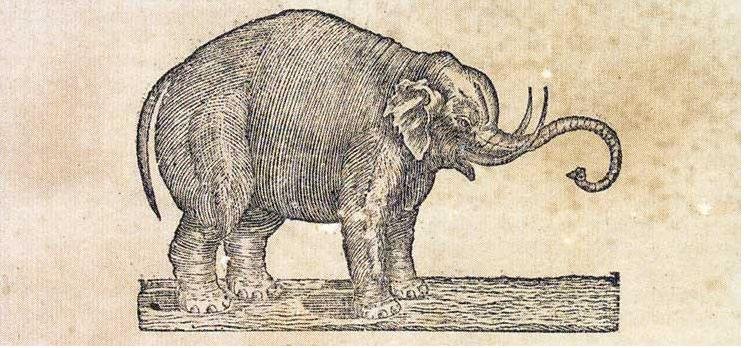
As to Diane's requirements: there is indeed, at the book's core, something huge. Gut-wrenching, heart-pulling emotion, yes of course. But more, much more than this, there is an elephant.

Monday, 1 May 2006

Sumer is icomen in,
Lhude sing cuccu.
Groweth sed and bloweth med
And springth the wude nu.
Sing cuccu!
Awe bleteth after lomb
Lhouth after calve cu:
Bulluc sterteth
bucke verteth,
Murie sing cuccu!


Today is May Day, traditionally the first day of Summer in England. OK, so there have been enough attempts to mess about with the traditional seasons, not to mention the events of September 1752, to make it impossible to say definitively when anything should happen "traditionally", but it seems to me that the period between May Day and Lammas works better as Summer than any other three month period.

Traditional (there's that word again) English summer holidays - going to the beach in August with a bucket and spade - are a very modern phenomenon, coming along during and after the Industrial Revolution. Before industrialisation the start of August marked the end of Summer, and the start of the harvest - the busiest time of the year.

Summer was a period of long, lazy days when the countryside was at its most green and pleasant, building up from the celebrations of May Day to Midsummer's Day, and then drifting peacefully towards Lammastide.

If there’s a bustle in your hedgerow
Don’t be alarmed now,
It’s just a spring clean for the may queen.
Yes, there are two paths you can go by
But in the long run
There’s still time to change the road you’re on.
And it makes me wonder.


The days are long now, and the old traditions still survive if you know where to look for them. These are the best three months of the year.

Friday, 28 April 2006

Pride and Prejudice is officially an Icon of England. It was one of 21 new icons added yesterday to the 12 original selections announced in January.

There are now six books which have been accorded icon status. The other five are the Authorised Version of the Bible, Alice in Wonderland, The Lindisfarne Gospels, On the Origin of Species and Domesday Book. These last three were also added yesterday. (Brick Lane is on the list, but I suspect that they mean the street rather than the novel).

What is slightly surprising is that the works of Shakespeare have not made it on to the list (although the Globe Theatre has). Nor has anything by Dickens, although that may be because there is no single Dickens novel that stands far enough above the rest in public esteem the way that Pride and Prejudice does among Jane Austen's works.

I am tempted to nominate the Regency Period as an icon in its own right (I have already put in a nomination for The Archers). At present the early 19th Century is represented by P&P and by HMS Victory, so it may be pushing things to have an eleven year slice of history on top.

In any case I should be husbanding my resources for a more important icon. If we are going to celebrate Stonehenge, Big Ben and the Angel of the North as English icons, then surely we should also include that other giant emblem of Englishness, the Elephant.

Sunday, 23 April 2006

Heyeroines in need of a slap

23. Elinor Rochdale (The Reluctant Widow)

As the creator of the Bridekirk Behemoth, I might be expected to have some sympathy for Miss Rochdale, since one of her most prominent features (mentioned three times in the first two pages) is a trunk. Sadly it quickly transpires that hers is not that sort of trunk, and indeed the more we learn of Miss Rochdale, the less like an elephant she turns out to be.

Firstly there is the matter of her taste in food. While elephants are known for a predeliction for buns (and, if Dr Johnson's Dictionary is to be believed, for pulses of all sorts), Miss Rochdale seems to eat nothing but bread-and-butter. She has this for dinner on her first arrival at Highnoons, and again for breakfast next morning at the Hall. When trapped in the book-room the next day with Master Nicky's dog bouncer, what does she request from Mrs Barrow but bread-and-butter.

Then there is the worrying lack of feathers. Not only does she arrive in Billingshurst without one in her hat, but she then marries Eustace Cheviot. Now of course we know that the magic feather was just a prop, a device to build up confidence, but at this early stage Miss Rochdale would surely have been better off with a bit more confidence. It must therefore be an unwise move for anyone with asirations of an elephantine sort to join herself to a man like Mr Cheviot who, in contrast to Mr Timothy Q Mouse, is well known for not having a feather to fly with.

What about that well-documented pachydermatous personality trait, curiosity? Again Miss Rochdale, or, as we must now style her, Mrs Cheviot, disappoints. On her first night at Highnoons she encounters a Frenchman wandering around indoors, despite the fact that all the doors and windows are locked, and that the side door, which he claims gave him access, does not even exist. Is she curious? Does she wonder what is going on? No. She simply goes to bed. She doesn't even ask the man his name. Presented the next day with a genuine secret passage, she refuses to enter it. I fear that our heyeroine can hardly be described as insatiable.

There comes a brief moment of hope about halfway through our tale, when the scutter of a mouse across the floor makes Mrs Cheviot jump nearly out of her skin - for elephants are notoriously scared of mice. Shortly afterwards Mrs Cheviot visits Chichester and comes back with a dress of grey muslin - about as elephantine a gown as one could hope for, particularly with the treble flounce.

This proves, however, to be a false dawn. Mrs Cheviot's diet continues strictly bun-free despite Miss Beccles eating macaroons, Lord Bedlington tucking into cakes and Mrs Barrow cooking up drop-cakes for Ned Carlyon and his brothers. It is the possibility of French spies, rather than the certain presence of mice that carries most weight in Mrs Cheviot's thinking when she considers whether to move out of Highnoons. Even the choice of grey clothing loses some of its impact when it emerges that the Honourable Francis Cheviot sports the same colour without any indication that he aspires to the elephant set.

We are ultimately forced to pack away Mrs Cheviot's trunk as a cruel delusion after the incident with the linen list. Mrs Cheviot is found semi-conscious on the floor. The inventory of linens prepared by Miss Beccles is scattered near the fireplace. Assorted Carlyons have arrived upon the scene, as has Dr Greenlaw. Lord Carlyon then asks Mrs Cheviot a very simple question. Before she lost consciousness, was the window of the book-room open? Mrs Cheviot replies that she has no recollection that it was. No recollection. Her very words.

I suspect that you have seen where I am going with this. No amount of curiosity over what Francis Cheviot wanted with the clock can any longer be persuasive. Nor can Mrs Cheviot's sudden predeliction for macaroons. Her determination to wear grey while still in strict mourning cannot be more than custom and practice. Even her decision to throw her lot in with the three ring circus of the extended Carlyon menagerie is insufficient. Nothing that Mrs Cheviot could say or do would allow us to consider her remotely like an elephant.

She may have been stunned by a paperweight, confused by the strangeness of her circumstances, placed under considerable stress by the activities of those around her. There are all manner of reasons that she might not have been at the top of her game, but the simple truth is unavoidable. Mrs Cheviot was asked a straightforward question, and answered that she could not recollect. Yet we all know that an elephant never forgets.


Technorati Tags:

Saturday, 22 April 2006


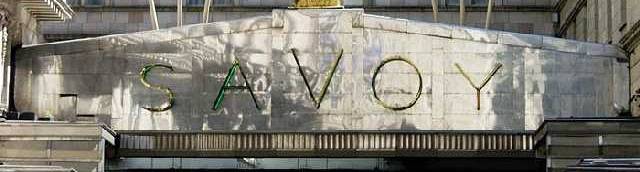
To the Savoy Hotel, for the awarding of the Fostergrant Reading Glasses Romantic Novel of the Year 2006. This is one of the high points of the romantic novelists' year, and tends to involve more seriously heavy drinking than either the RNA Summer or Winter Parties (but not as much as the Annual Conference, but then that lasts for several days).

Published authors usually have their publishers buy them tickets, and they sit surrounded by their editors and other key players from the company. Those of us who pay for our own tickets can express a preference for whom we sit with, but in the end we are in the hands of the RNA committee, and in particular those of the indefatigable organiser of the event, RNA vice-Chairman Catherine Jones.

My luck was in. I actually ended up on Catherine's table, together with, among others, former short-listed author Linda Taylor, and two very pleasant people from Darley Anderson Literary Agency, Elizabeth Wright and Lucie Whitehouse.

The food was good. Asparagus with a cured lemon sauce (we did wonder what had been wrong with the lemon before it had been cured), loin of lamb (not quite as tender as the new season lamb from Stourhead that I cooked last Sunday but still yummy in a herb crust), and a dessert featuring thyme sorbet, which I loved, but others found a little too unusual.

The main business of the event was the awarding of the Fostergrant prize, complete with a cheque for £10,000. Five of the seven nominees were there at the savoy, the exceptions being Ashleigh Bingham, who lives in Australia (I believe that she is a little frail, and probably could not face the journey) and Nicholas Sparks. The winner was Erica James, for Gardens of Delight. She has been on the shortlist four times before. I was rooting for The Ship of Brides, by Jojo Moyes, not least because she has been known to read this blog. Jojo was sitting at the table next to mine, and was incredibly gracious about Erica James winning when I commiserated with her.

The Fostergrant isn't the only prize awarded at the Savoy. The RNA also awards a (smaller) prize for the best category romance of the year, and this went to Contracted: Corporate Wife, by Jessica Hart. I was hoping that it would win. I have to confess to having not actually read it (nor any of the other shortlisted books, I'm afraid), but what I liked about Contracted: Corporate Wife was the colon in the title. As regular readers may have noticed, I am all in favour of punctuation in book titles (apostrophes don't count), and titles with colons are thin on the ground (I note that the French takeover of Time Warner Book Group has been good for punctuation, as they have been renamed Little, Brown).

There were speeches as well as prizes. The chairman of the judges, Dr Susan Horsewood-Lee, did go on a bit, and to be honest was not a patch on last year's chairman, Danuta Keane (who wrote a rather depressing piece for Mslexia, which was reproduced in edited form in a recent edition of the Independent). Stanley Johnson, father of the more famous Boris, gave a rambling talk about not very much. Luckily there was still plenty of wine on the table so this did not eat into critical drinking time.

Then it was all over, and we made our way to the Coal Hole for the proper business of the day.

Sunday, 16 April 2006


I have just finished the rewrites for Anne-Marie. Tomorrow I will give the whole thing one final read to make sure that I haven't made some horrendous mistake, and if all is well it will be in the post to Ampersand on Tuesday.

At the start of this process Lord Alexander's Cipher; or, the Bridekirk Behemoth was 101,572 words long, spread over 11 chapters. It is now a trim 89,775 words, broken into 21 shorter, more pacy chapters.

But there is more than just an 11.6% reduction in length. In the course of revising LAC;o,tBB I have, I think, made the story more plausible, yet more exciting. I have made the heroine more real.

I have also corrected three significant continuity errors. I have amended more than a dozen cases where the wrong character is apparently in the scene. I have picked up seven cases of misdescribed relationships. I have corrected hundreds of more minor errors in grammar and spelling.

Looking back at what I sent to Ampersand in the first place I can only conclude that they were mad to sign me up when they did (but don't tell them that). I just hope that they now have a book that they can work with. It is certainly a much better book than it was at Christmas.

Now for the sequel. I have a month for research before I start writing it.

Saturday, 15 April 2006

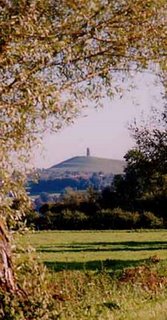
The Wenlock family took a tour of Somerset yesterday, in pursuit of ideas for the sequel to Lord Alexander's Cipher; or, the Bridekirk Behemoth. Our first stop was at Glastonbury, where we climbed the Tor. Conditions were far from ideal; the tower loomed out of low clouds; it was real Marion Zimmer Bradley weather.

So what has this to do with the novel that, for quite a while, has carried the working title of Lady Cardington's Folly; or, the Limehouse Leviathan? My original idea was to have the story involve the Nautilus, or something like it. Unfortunately I was beaten to it by James McGee's Ratcatcher. But I now have a new idea, which features a somewhat deluded nobleman, the Earl of Avalon, who is incensed by Walter Scott's relocation of Arthurian legend to Scotland in The Lady of the Lake. The true Lake, he believes, is on his own estate.

A lake that looks something like our second destination, Stourhead. The Earl of Avalon's great house, with landscaped gardens, eyecatchers, follies, etc, is not, of course, going to be Stourhead itself, but is certainly inspired by it.

By the afternoon the mists and clouds had dispersed, and after touring the house, with its wonderful Regency library (a little too much of the rest of the house was restored to Edwardian grandeur following a bad fire in 1902), we walked around the lake, stopping off at the Grotto, the Temple of Apollo, the Gothic Cottage and the Pantheon.

My story is to be set in 1814, immediately after the defeat of Napoleon. The Earl invites our heroine, Miss Laeticia Leintwardine, to play the part of the Queen of Beauty (a part for which she is eminently qualified) in a great Arthurian pageant. Of course such an event attracts the interests of others, and neither the Earl's plans, nor the course of true love, will run entirely smooth.

There will be buckles swashed, and derring done, but also hearts lost and hearts won. How it all works out in the end I will only know when I have written it, but I hope that I will have some idea after my writing week in deepest darkest Wales at the end of May.

Tuesday, 11 April 2006

The bookshop stands on a quiet street in an as yet unknown corner of Oxfordshire. We will call it Mostly Books because of the great number of books which make the surrounding shelves their home, and rest on the tables between cups of freshly-made coffee.

Mostly Books is due to open on 1 July. Nicki and Mark, who are setting it up, are blogging about their experiences in the run-up to the launch. Currently they are wondering what books to include in their first consignment of stock.

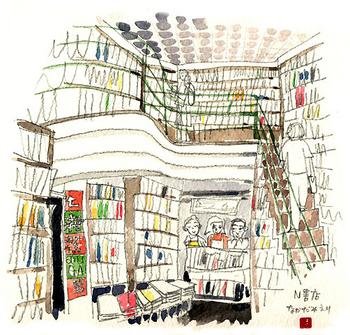
Lord Alexander's Cipher; or, the Bridekirk Behemoth won't quite be available on 1 July, at least, not this next 1 July, but Flora Thompson's wonderful Larkrise to Candleford (cruelly pastiched above) is a book that no Oxfordshire bookseller should be without.

With all the talk of the Wottakars merger, and the rise of Tesco as the biggest bookseller in the country, it is good to see bookselling on a more human scale. I wish them all the luck in the world.

Sunday, 9 April 2006

Miss Snark has announced the results of her writing competition and the overall winner is...

ME

I'm stunned.
Heyeroines in need of a slap

22. Sarah Thane (The Talisman Ring)

When I first started this series of character assassinations studies I was conscious that one or two of my subjects would arouse particularly strong emotions among those who refuse to have any fault imputed to their particular idol. I suspect that Miss Thane is one such icon of heyeroinedom, so I should perhaps tread lightly. I should, but that doesn't mean that I shall. I will, however, attempt to be thorough. I will lay out the evidence, but it is for you to draw your own conclusions.

A careful study of Miss Thane's behaviour in chapter one of The Talisman Ring is not, it must be said, particularly illuminating. This is because she never shows. Nor does she feature in chapter 2 nor chapter 3. Once we get to chapter 4 we discover the reason for this. She has overslept and missed the start of the story. Laziness, or something more sinister? We shall return to that particular point later. For now I shall simply note that had the oh-so-sensible Miss Thane done the sensible thing, and been up and about in the early pages, Ludovic might not have been shot, and we would have escaped the worst of Mademoiselle de Vauban's histrionics. And yes, Eustacie may be a rather over-imaginative young woman, but at least she is professional enough to show up in the first chapter.

Having finally appeared, if not having bothered to get dressed, Miss Thane gives every impression of being one of those people who think that the best way to make up for being late is to talk and talk until we rather wish she hadn't made the effort after all. At the same time she wants to talk in such a variety of registers that we are astounded by her versatility. Within the first three pages she speaks "placidly", "imperturbably", "earnestly", "regretfully", "meekly" and "encouragingly". It is hardly surprising that there is a great scarcity of adverbs in contemporary dialogue tags with Miss Thane's liberal deployment of them here. At least we have a good idea what Heyer means by Miss Thane having "a generous mouth".

This is not the only aspect of Miss Thane's generosity that we become aware of. She is also very free with her hartshorn and her basilicum powder. Quite a travelling pharmacopeia is our Miss Thane. Now why should that be?

Heyer also describes Miss Thane as "sensible", and this is, I know, very much the perceived wisdom, but is she really sensible? The evidence points the other way, and does so even if one ignores her wilful encouraging of poor Mademoiselle de Vauban's morbid fascinations.

Let us take the critical topic of interior decoration. Miss Thane appears to be woefully ignorant on all aspects of cartouches, caryatids and scratch-mouldings, let alone strap-and-jewel work. She probably wouldn't recognise silver-figured oak wainscoating if you nailed it to the walls all around her. Such deficiencies are always regrettable, but can usually be disguised by the deployment of diversionary tactics - fainting fits, megrims, cornflower blue eyes, that sort of thing. Far from adopting such an approach, Miss Thane (grey eyes, but she could surely improvise) throws herself into an elaborate scheme whose success depends absolutely upon her having expertise in precisely this area. Is that sensible, or behaviour more to be expected from one under the influence of... but I get ahead of myself.

Let us instead consider Miss Thane's role in that critical scene where Ludovic is about to be discovered by Mr Stubbs, the Bow Street Runner. Except that she plays no role at all. She has gone out for a "sedate" walk with her brother. Of course I am not going to suggest that anybody read any significance into the word "sedate". Not at all. At least, not yet.

But while Miss Thane was off being "sedate", it was left to Ludovic Lavenham to improvise the obligatory cross-dressing masquerade scene without which no Heyer romance is really complete. He makes a reasonable enough fist of it, but nobody can deny that had Miss Thane been present it would have run more smoothly. Yet it is she who kicks up a fuss about the loss of her "French perfume". Sensible? I think not.

Nor is it sensible to wander about at night in the middle of February in the belief that one is being caressed by balmy breezes on the way to a romantic tryst with a man that she has frequently described as having not a romantic bone in his body. Not sensible, but possibly understandable if one ha been indulging in... but, let us see this through to the end.

The Talisman Ring ends with great excitement, following the discovery of the ring itself. Sir Tristram is rushing off to London on the Night-Mail. Eustacie is in a state of high excitement. Where is Miss Thane? She is walking in a "leisurely fashion". She is slipping into "empty-headed femininity". She is subsiding in an "inanimate heap on the floor", where she misses the actual capture of the villainous Beau Lavenham.

It is perhaps that name that gives us a clue as to what is really going on here. The whole adventure never happened. It was all taking place inside Miss Thane's head. Far from being a witty romantic adventure, The Talisman Ring is nothing more than the terrifying portryal of a vision in opium.

Not Lavenham but Laudanum? You must decide for yourselves.


Technorati Tags:

Saturday, 8 April 2006

Last night I saw my heroine, Miss Charlotte Hopesay, in the flesh.

Well, not exactly. As I have mentioned, Miss Hopesay's physical appearance is inspired by Heather Findlay of progressive rockers Mostly Autumn. The band played last night in the Corn Hall in Cirencester, which is less than 20 miles from the Wenlock abode, so I went along. I managed to secure a place almost at the front, strictly for research purposes, of course.

Heroes and heroines in less well written romances appear to be able to identify the colour of each others' eyes at a glance across a crowded room. The light level of a typical Regency ballroom cannot have been significantly better than that of the Corn Hall last night, and I found it very difficult to determine the colour of Miss Findlay's eyes from twelve feet away. They were not cornflower blue, flashing green nor (because such things don't exist naturally) amethyst. They were not cool grey, nor an intense dark brown (this one does exist - my eyes are a very deep brown). My conclusion was that they are hazel, not least because there is no real consensus over what colour hazel actually is.

I didn't spend the whole evening staring into Miss Findlay's eyes, however. I also wanted to see how her face reflected emotions, and how she moved about. Being the lead singer in a rock band she managed to express a wide range of intense emotions: sorrow, happiness (even ecstasy), pain and anger. But she was not strutting the stage the whole time, and during breaks between songs, or during other bandmembers' solos, she showed gentler emotions: thoughtfulness, wistfulness, concern, even confusion.

I did less well, from a research point of view, when it came to watching Miss Findlay move. Unfortunately she had not chosen to wear a high-waisted, full-length evening dress in primrose silk, or even a walking dress of sprig muslin. Nor was her footwear - knee-length black leather and suede boots with 3 inch stiletto heels - quite in keeping with what Miss Hopesay would have worn to Lady Stretton's Salon, or as the everyday clothes of a gently-born governess-companion.

But you can't have everything. The music was great, even if I did get absolutely drenched biking home in the wind and rain. Maybe next time the band plays in this area I will be able to persuade Miss Findlay to wear something a little more Regency.